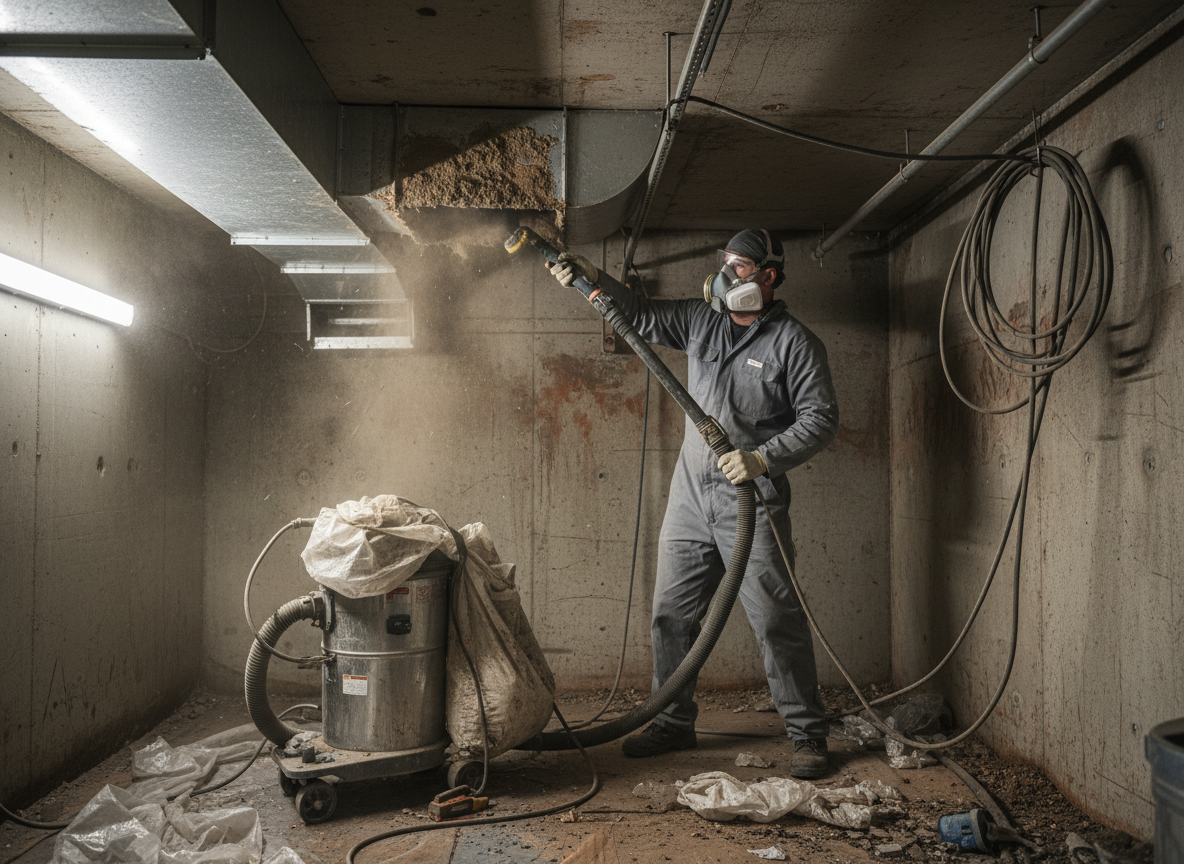
Homes built across Tarneit and Wyndham Vale in the City of Wyndham often feature flexible duct runs that trap construction dust and pollen carried in on warm summer winds. Over time these layers restrict airflow and push fine particles back into living spaces, especially in single-storey brick veneer houses common near Werribee Plaza. Cleaning crews must separate supply and return lines carefully to avoid collapsing older flex duct while removing the compacted material that builds during extended air-conditioning runs.
Properties closer to the Werribee River or Werribee Open Range Zoo sit on flatter terrain where morning fog and light winds keep airborne particles suspended longer. This leads to heavier accumulation inside return plenums compared with inland streets in Hoppers Crossing. Technicians working from 114B Watton St routinely check for moisture staining at duct joints because the temperate climate allows occasional high-humidity days that can turn settled dust into a breeding medium for mould if left untreated.
In Riverbend estates the newer duct layouts run through roof spaces that reach high temperatures in summer, baking fine silt into a hard layer along the bottom of the trunk lines. Standard vacuum tools alone will not release this material; agitation heads sized for 200 mm and 300 mm ducts are required. Crews also inspect the short vertical drops to ceiling registers because these sections collect the heaviest debris and are the first to restrict airflow when residents increase cooling use.
Werribee South properties near the coast experience salt-laden air that mixes with household dust, creating a slightly abrasive coating inside metal duct sections. This combination wears on seams faster than inland dust alone, so cleaning includes a visual check for pin-hole corrosion before high-velocity extraction begins. All work is completed from the 114B Watton St base with same-day response available 24 hours.
Technician insight
In Werribee the thing that catches most people out with dirty air ducts cleaning is the hard-baked silt layer that forms in roof spaces during warm summers, especially in Tarneit homes where flex duct runs through uninsulated roof cavities. Homeowners often think a standard vacuum will shift it, but without proper agitation tools the material stays stuck and airflow stays restricted.
Tarneit return line blockage
A Tarneit family noticed weaker airflow from every second vent after several hot weeks. Inspection found construction dust mixed with summer pollen compacted in the main return trunk. The crew agitated and extracted the material in sections, restoring full flow without replacing any ductwork.
How it works
- 1
On-site Assessment
Technician inspects accessible ducts, registers and plant equipment in the roof space or underfloor area to map layout and note any moisture or damage.
- 2
Isolation and Protection
Registers are sealed, furniture and floors covered, and negative pressure established to contain dust during agitation.
- 3
Agitation and Extraction
Rotary brushes and compressed air tools loosen compacted material while a high-volume vacuum removes debris from the opposite end of each run.
- 4
Final Inspection and Reassembly
All sections are checked with a camera, seals replaced where needed, and registers reinstalled before the system is returned to normal operation.
Pricing
Upfront quotes given after inspection; price varies with duct length, access and number of storeys.