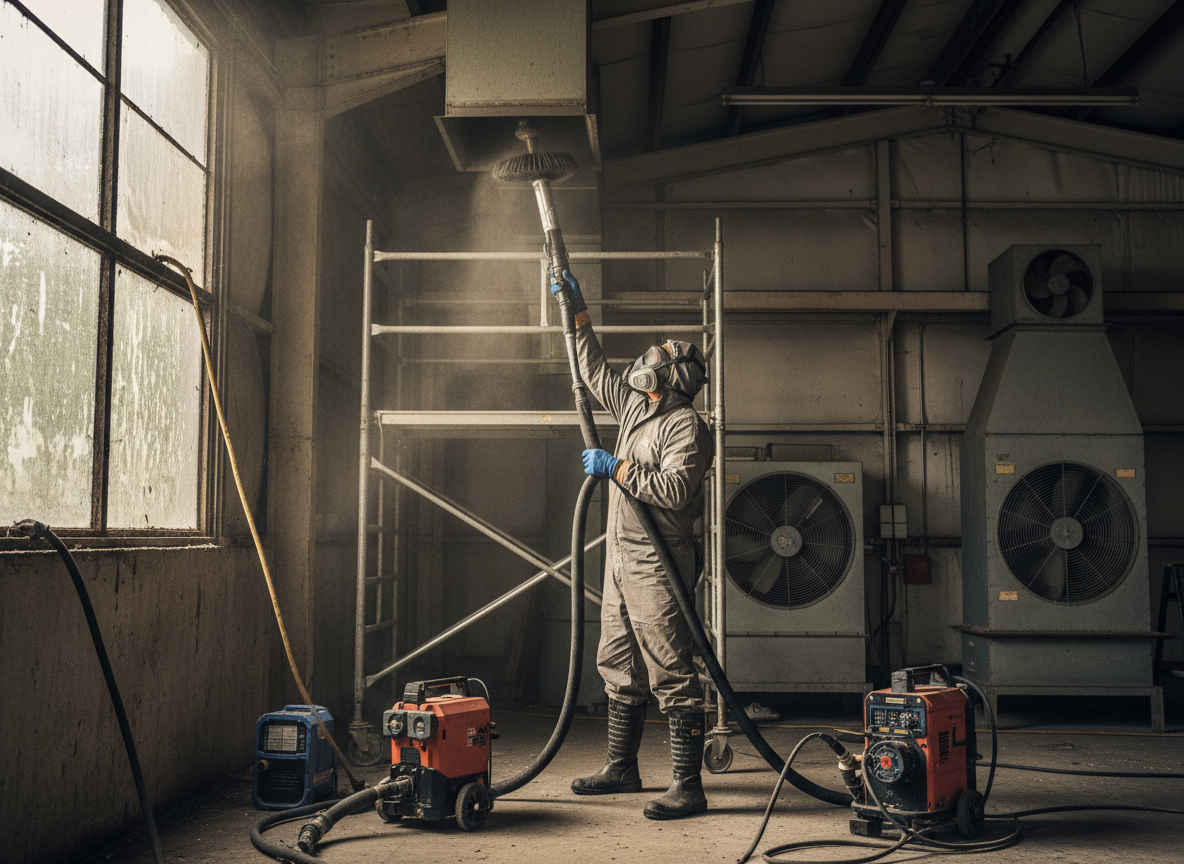
Werribee homes built from the 1980s onward in Riverbend and Wyndham Vale often run flexible duct runs through roof spaces that collect fine dust during the warm summers when evaporative coolers run for months. An emergency call usually arrives after a sudden airflow drop or musty smell appears once temperatures climb. We arrive from 114B Watton St within hours, isolate the affected trunk lines and use negative-air machines sized for the larger floor plans common in Tarneit estates. Skipping the return-air path or leaving residual dust in the plenum simply moves the problem to another room within days.
Hoppers Crossing and Werribee South properties sit on flatter terrain with less natural drainage, so heavy summer storms can push moisture into under-floor ducts. When that happens the first sign is often a sharp odour after the system restarts. Our emergency protocol includes moisture checks with a pin meter before any vacuuming begins, because pulling damp debris through the machine risks spreading spores. We open only the necessary access points, photograph every section, and reseal with code-compliant tape rather than leaving gaps that draw in more dust from the roof cavity.
City of Wyndham planning rules require that any work near Werribee Park heritage zones keeps noise and vehicle movement to a minimum. On emergency jobs we stage equipment on the street side and run short hoses rather than driving onto the property. This approach also avoids compacting the sandy soil that underlies many older blocks and can shift footings if heavy vehicles park too close. Homeowners who attempt DIY wet-vac extractions in these conditions frequently push debris deeper into the 150 mm branch lines that feed bedrooms.
After the main lines are cleared we always test static pressure at the nearest and furthest registers. In newer Tarneit builds the longer runs can mask a partial blockage until the system is under full summer load. Recording those readings lets us show the owner exactly what changed and prevents repeat calls when the next heatwave arrives.
Technician insight
In Werribee the thing that catches most people out with emergency air duct cleaning is the long flexible runs in 1990s Riverbend and Wyndham Vale homes. Warm summers keep evaporative coolers running for weeks, packing fine silt into the low points of those ducts. When a blockage finally shows, the silt is often sitting in a sag that standard brushes miss unless you open the exact low spot.
Sudden odour after first summer storm
A Wyndham Vale homeowner noticed a damp smell the morning after heavy rain. We isolated the under-floor duct run, found moisture trapped in a low sag near the laundry, extracted the damp debris and dried the line before resealing. Airflow returned to normal and the odour did not return.
How it works
- 1
Take the call and confirm location
We log the address in Riverbend, Tarneit or Wyndham Vale and note whether the issue started after a storm or during heavy AC use so we can bring the right moisture or dust tools.
- 2
Arrive and isolate the system
At the property we shut down the unit, locate the main trunk and place containment sheeting before any panels are removed.
- 3
Clear and document
Negative-air extraction runs until registers read clear, with photos taken at each access point for the owner’s records.
- 4
Restore and verify
We reseal all openings, restart the system and confirm airflow at multiple points before leaving the site.
Pricing
Emergency rates apply outside standard hours; final cost depends on number of access points and whether moisture remediation is needed.