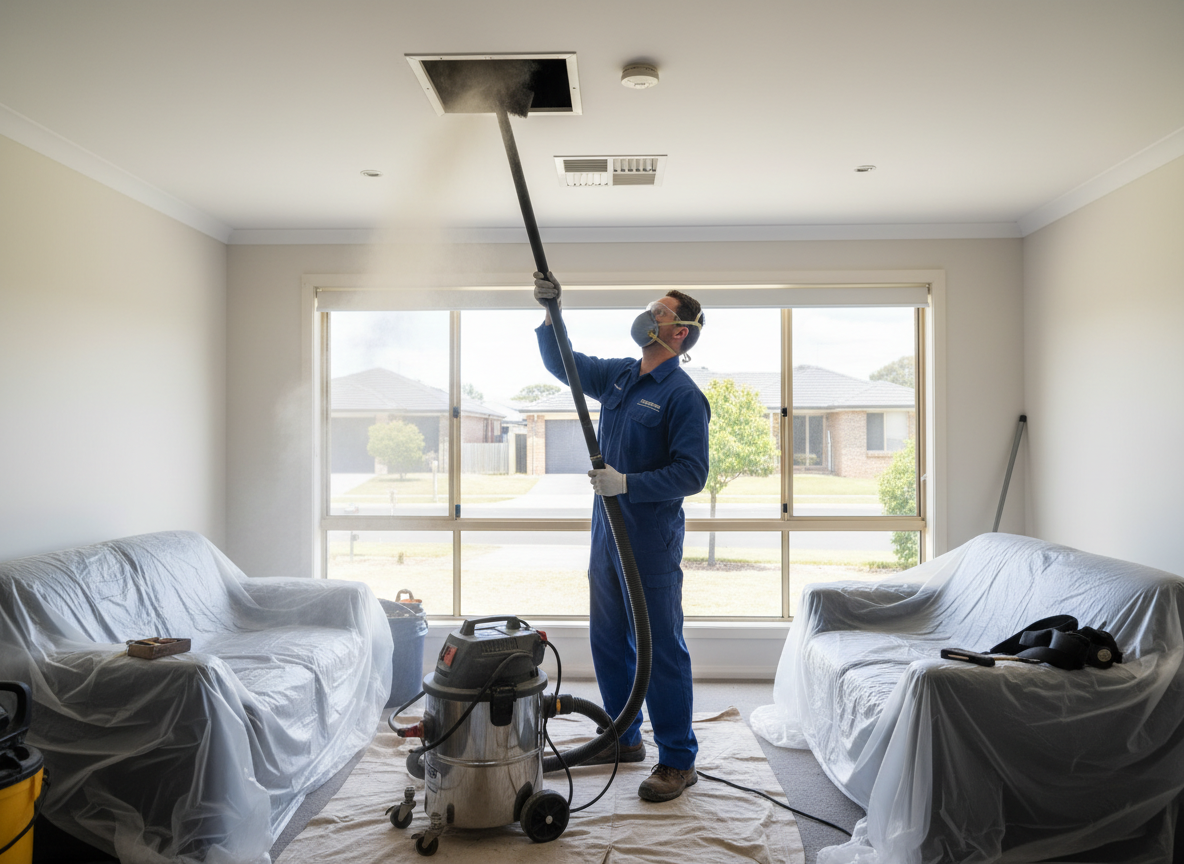
Werribee homes in neighborhoods like Tarneit and Wyndham Vale often feature ductwork installed during the 1990s and early 2000s expansions, when many properties were built with flexible duct runs running through roof spaces exposed to the region's warm summers. Dust, pollen from nearby open spaces such as Werribee Park, and fine soil particles carried on prevailing winds settle inside these lines, reducing airflow and stressing heating and cooling units. Technicians working from the base at 114B Watton St regularly encounter collapsed or poorly supported sections that require careful handling to avoid further damage during cleaning.
In the City of Wyndham, temperate conditions with warm summers increase the frequency of air conditioning use, which draws in external contaminants through unsealed returns in single-story brick veneer homes common around Riverbend and Hoppers Crossing. Edge cases include older properties near Werribee South where original metal ductwork has developed corrosion from occasional humidity spikes, requiring slower vacuum speeds and inspection cameras to map blockages before any agitation tools are used. Homeowners sometimes attempt DIY vacuuming of vents, which pushes debris deeper into inaccessible runs and creates uneven pressure that can dislodge insulation.
Access challenges appear frequently in two-story homes in Wyndham Vale where main trunks run through tight ceiling cavities with limited entry points. Technicians must coordinate with existing HVAC layouts to isolate zones without affecting neighboring properties, especially in attached units near Werribee Plaza. Proper negative-pressure containment prevents cross-contamination between supply and return sides, a step that becomes critical when ducts pass near kitchens or laundries where grease or lint loads are higher.
Technician insight
In Werribee the thing that catches most people out with professional air duct cleaning is how quickly fine soil from the surrounding plains settles in roof-space ducts during warm summers, especially in 1990s homes around Tarneit where flexible duct sags and creates hidden collection points that standard household vacuums cannot reach.
Tarneit Family Home with Reduced Airflow
A Tarneit household noticed weaker cooling from ceiling vents during summer. Inspection revealed heavy dust and pollen accumulation in sagging flexible ducts running through the roof space. Negative-pressure equipment and targeted agitation cleared the lines without disturbing insulation. Airflow returned to normal and the family reported more consistent temperatures.
How it works
- 1
Initial Inspection
Technicians arrive at the property and use cameras to assess duct condition, noting any collapsed sections or heavy debris loads typical in City of Wyndham homes.
- 2
Zone Isolation
Supply and return lines are isolated to prevent dust migration during cleaning, with particular attention to roof spaces affected by warm summer conditions.
- 3
Agitation and Extraction
Specialized brushes and compressed air tools loosen buildup while a high-powered vacuum draws material out from the 114B Watton St equipped vehicle.
- 4
Final Verification
Post-cleaning camera footage confirms clear airways and the system is returned to normal operation with vents reinstalled.
Pricing
Cost depends on number of runs, access difficulty in roof spaces, and whether flexible or rigid duct is present.