2026-10-22 ·
Common Airflow Problems in Wyndham During Bushfire Season
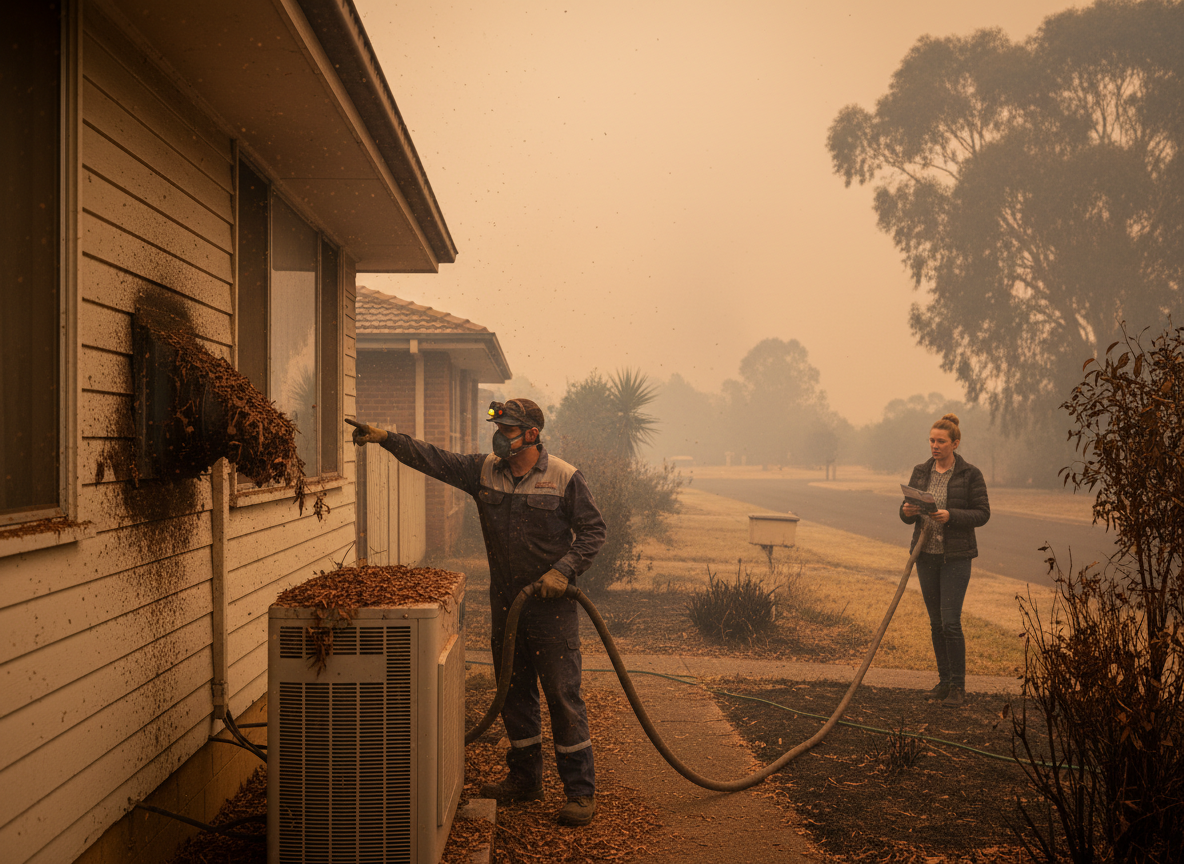
Bushfire season brings fine ash and smoke particles that quickly restrict airflow through residential ducts in the City of Wyndham. Homes in Werribee, Tarneit and Wyndham Vale experience measurable drops in air movement once ash coats filter media and settles inside supply runs, often within the first week of sustained smoke exposure.
Ash Accumulation in Supply Runs
Fine ash from bushfires travels through open windows and evaporative coolers common in Werribee's temperate climate with warm summers. The particles settle on the bottom of horizontal duct sections in single-storey homes found throughout Riverbend and Wyndham Vale. Over time this layer thickens and narrows the effective diameter of 150 mm and 200 mm ducts, forcing fans to work harder and reducing delivered airflow by noticeable amounts. Residents near the Werribee Open Range Zoo and Werribee Park report the same pattern each season because prevailing winds carry ash from the north-west across the plains. Regular inspection of the first 1.5 metres of supply duct after the furnace or air handler reveals the heaviest deposits in these older and mid-age houses.
Filter Loading and Reduced Airflow
Standard pleated filters in Wyndham homes capture bushfire smoke rapidly, often reaching capacity in three to five days instead of the usual thirty. When filters load with ash, static pressure rises and airflow through the entire system drops, particularly affecting upstairs rooms in two-storey dwellings in Tarneit. Homeowners who delay filter changes notice warmer bedrooms and longer run times on air-conditioning units during the warm summer months. Switching to a higher-MERV filter helps temporarily, yet the underlying ducts still require cleaning once the fire danger period ends. Air duct cleaning improve air quality restores original flow rates once the ash is removed from both the filter housing and the downstream runs.
Impact on Older Werribee Housing Stock
Many homes built before 1990 in central Werribee and along Watton Street have flexible duct sections that sag and trap ash in low spots. These older systems lack the smooth interiors of newer rigid ductwork found in newer Tarneit estates, so ash adheres more readily and creates persistent airflow restrictions. The combination of warm summer temperatures and occasional strong northerly winds during bushfire events accelerates the problem. How to improve ventilation in older Werribee houses explains the specific modifications that reduce future ash entry points while preserving the original duct layout.
Post-Bushfire Cleaning Priorities
After the smoke clears, focus first on the return-air pathway because it pulls the highest volume of contaminated air. Next clean the supply plenum and the first three metres of each branch run where ash settles most heavily. In Wyndham Vale properties with slab-on-ground construction, floor registers often contain the densest deposits because gravity pulls particles downward. Technicians working from the 114B Watton St, Werribee VIC 3030 base can reach these homes the same day when scheduled through the 24/7 service line, allowing residents to restore normal airflow before the next heatwave arrives.
Preventing Recurrence in Wyndham Vale and Tarneit
Sealing gaps around evaporative cooler pads and installing magnetic vent covers on unused rooms reduces ash entry during future events. Homeowners in Hoppers Crossing and Werribee South who added whole-house return-air filters after the last major season report slower filter loading the following summer. Dirty air ducts cleaning performed at the end of each bushfire season removes residual ash before it mixes with household dust and becomes harder to extract. These steps keep airflow consistent through the warm months when cooling demand peaks across the City of Wyndham.